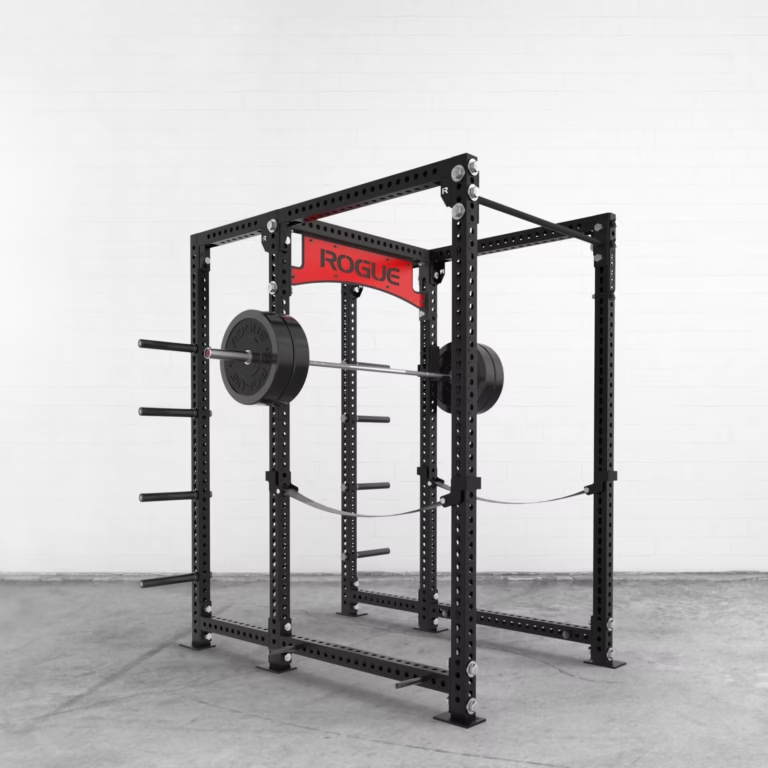
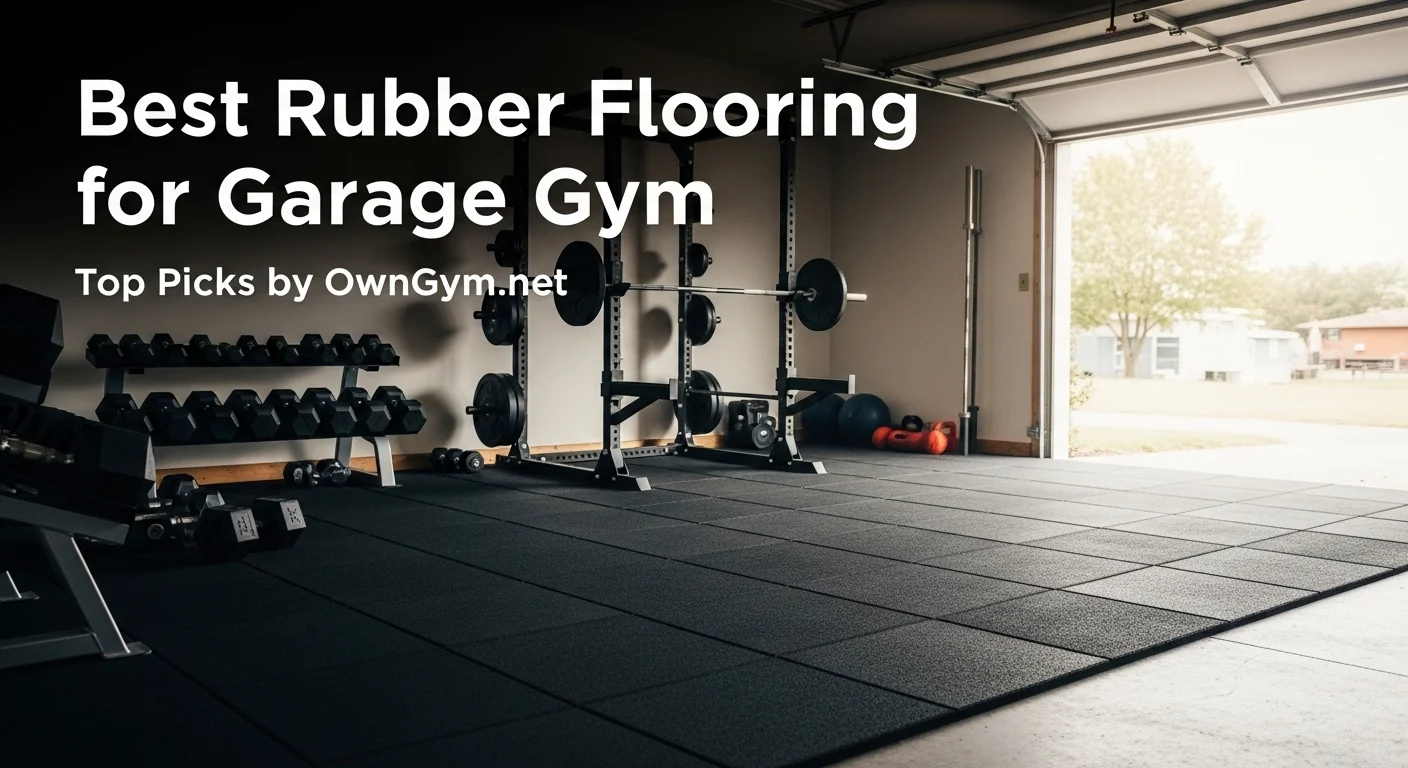
Bare concrete is the enemy of a good home gym. It is hard on your joints during cardio, cracks and chips under dropped weights, damages barbells and dumbbells on impact, and turns your training space into a cold, slippery hazard. Rubber gym flooring fixes all of that in a single afternoon. The right rubber floor protects your concrete, cushions every rep, deadens noise, and transforms a raw garage into a proper training environment — and you do not need to spend a fortune to do it right.
This guide covers the five best rubber flooring options for garage gyms available on Amazon in 2026, including interlocking tiles, rubber rolls, and large exercise mats. We also include a full thickness guide, a step-by-step installation section, and answers to the most common rubber flooring questions so you can buy with confidence.
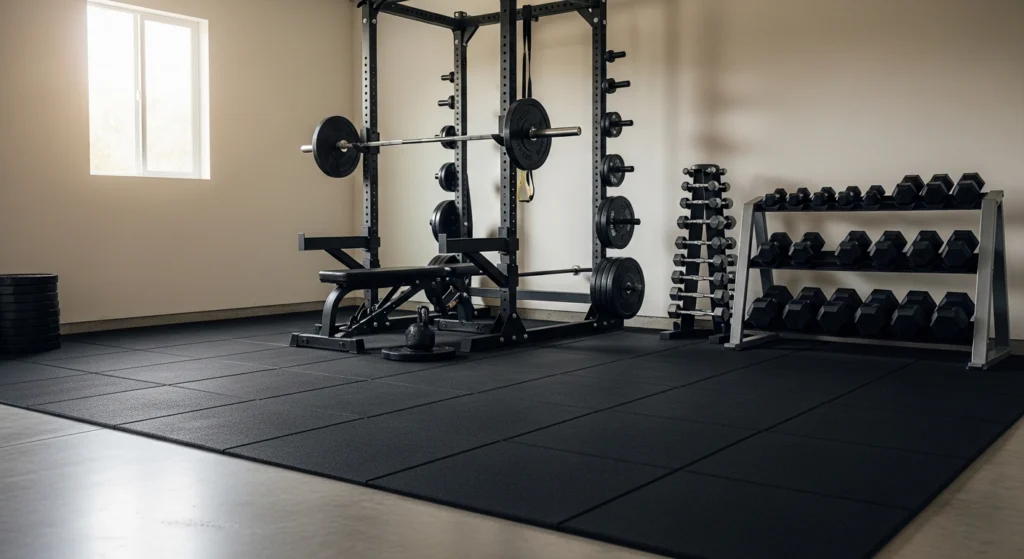
Quick Comparison: Best Garage Gym Rubber Flooring
| Product | Format | Thickness | Coverage | Best For | Price |
|---|---|---|---|---|---|
| Yes4All Rubber Gym Flooring Tiles | Interlocking tiles | 0.56″ | 24 sq ft (6 tiles) | Best Rubber Tiles Overall | $$ |
| Yes4All Interlocking Foam Mat Tiles | Interlocking foam tiles | 7/16″ | 24 sq ft (6 tiles) | Best Budget Foam Tiles | $ |
| IncStores Rubber Flooring Roll | Roll | 3/8″ | Per linear ft | Best Rubber Roll Overall | $$ |
| Gorilla Mats Premium Large Exercise Mat | Mat (roll out) | 1/4″ | 6×4 ft per mat | Best for Cardio / Spot Coverage | $$ |
| ProsourceFit Puzzle Exercise Mat | Interlocking foam tiles | 3/4″ | 24 sq ft (6 tiles) | Best Thick Cushion Tiles | $ |
1. Yes4All Rubber Gym Flooring Tiles — Best Rubber Tiles Overall
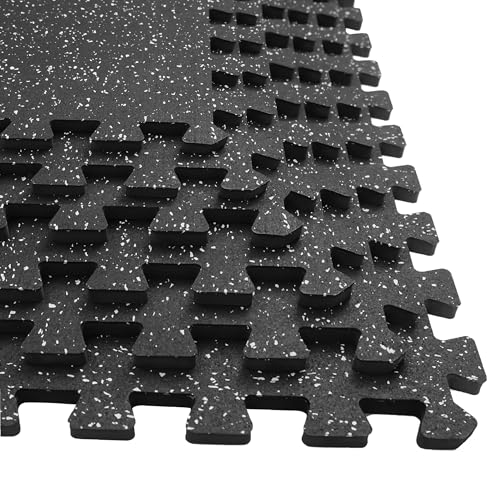
The Yes4All Rubber Gym Flooring Tiles are the best overall interlocking rubber floor tiles for a garage gym on Amazon. At 0.56 inches thick, these are genuine rubber-topped tiles — not soft foam — which means they can handle heavy free weights, power racks, and barbell drops without compressing or deforming over time. Each set covers 24 square feet with 6 tiles, and sets can be purchased in multiples to cover larger gym spaces. The interlocking puzzle-edge system snaps tiles together securely and keeps them from shifting during intense workouts.

The rubber top surface delivers excellent grip for all training footwear — from bare feet to gym shoes to weightlifting shoes — and resists moisture, sweat, and cleaning products without degrading. The EVA foam core beneath the rubber surface adds just enough cushion to protect your joints during standing exercises and high-rep movements while remaining firm enough for stable lifting. Yes4All rates these tiles for high-impact use, making them suitable for the full range of garage gym activities from cardio to heavy strength training.

Installation takes under 30 minutes for a standard 1-car garage bay — simply interlock the tiles starting from one corner and work outward. The border edge pieces give a clean, finished look at the walls and doorways. Yes4All is one of the most trusted fitness equipment brands on Amazon with years of verified customer reviews. If you want genuine rubber flooring tiles that last, perform well under heavy loads, and are available in bulk on Amazon, these are the best choice in the category.
- Format: Interlocking rubber-top tiles with EVA foam core
- Thickness: 0.56 inches (approximately 14mm)
- Coverage per set: 24 sq ft (6 tiles)
- Surface: Rubber top — grip for shoes and bare feet
- Best use: Full garage gym floor coverage, heavy free weights, general strength training
- Pros: Real rubber surface, excellent under heavy loads, easy interlocking install, moisture resistant
- Cons: Need multiple sets for larger garages, heavier than foam-only tiles
Best for: Home gym owners who want genuine rubber tiles that handle heavy weights and full garage coverage with a clean, professional look.
Buy on Amazon2. Yes4All Interlocking Foam Mat Tiles — Best Budget Foam Tiles
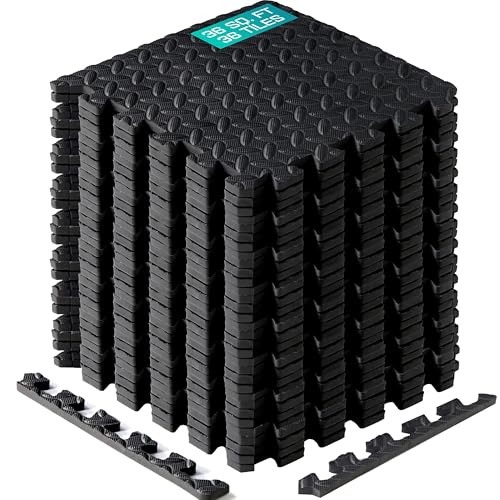
The Yes4All Interlocking Foam Mat Tiles are the most popular budget gym flooring option on Amazon and an excellent starting point for anyone who wants to cover their garage floor quickly and affordably. At 7/16 inches thick, these EVA foam tiles deliver solid cushioning for bodyweight exercises, yoga, stretching, and light cardio without the higher cost of rubber-topped tiles. Each 6-tile set covers 24 square feet and tiles interconnect seamlessly to cover any room size — simply buy additional sets and snap them together.

EVA foam is lightweight, easy to cut with a utility knife or scissors, and very easy to clean with a damp mop or spray cleaner. The tiles are waterproof and do not absorb sweat or odors, making them hygienic for long-term use. The surface texture provides adequate grip for most workout shoes and bare feet during low-to-medium intensity training. While these are not the right choice for heavy barbell work or dropping weights, they are perfect for creating a comfortable, padded surface under cardio machines, yoga areas, and stretching zones within a larger garage gym setup.

Many home gym owners use the Yes4All foam tiles in combination with heavier rubber mats or rolls — foam tiles cover the cardio and stretching zone while thicker rubber mats protect the lifting area. This layered approach is a very cost-efficient way to floor an entire garage gym without overspending on premium rubber everywhere. At one of the lowest price points per square foot on this list, the Yes4All foam tiles are unbeatable value for light to moderate use.
- Format: Interlocking EVA foam tiles
- Thickness: 7/16 inches (approximately 11mm)
- Coverage per set: 24 sq ft (6 tiles)
- Material: EVA foam — waterproof, lightweight
- Best use: Cardio zones, yoga, stretching, bodyweight training
- Pros: Lowest price per sq ft, lightweight, easy to cut, waterproof, fast installation
- Cons: Not suitable under heavy weights or barbell drops, compresses under rack feet over time
Best for: Budget shoppers, beginners, or home gym owners who want to cover their cardio and stretching zone at the lowest possible cost.
Buy on Amazon3. IncStores Rubber Flooring Roll — Best Rubber Roll for Garage Gyms

The IncStores Rubber Flooring Roll is the most practical solution for covering an entire garage gym in one continuous, seamless surface. Unlike interlocking tiles that have visible seams every 24 inches, a rubber roll lays flat in one unbroken sheet from wall to wall — eliminating the gaps where dust, chalk, and moisture collect. The 3/8-inch (9.5mm) thickness is the sweet spot recommended for most home gyms — thick enough to protect the concrete from heavy equipment and absorb impact, yet firm enough to provide a stable surface for heavy squats, deadlifts, and bench pressing.

IncStores has been one of the leading names in Amazon gym flooring rolls for years, with thousands of verified customer reviews from garage and basement gym builders. The recycled rubber construction delivers excellent durability — these rolls do not crack, curl, or degrade under gym equipment even after years of use. The textured top surface provides grip for training shoes and resists moisture and cleaning products. Rolls are sold by the linear foot, meaning you can order precisely the length you need to cover your specific garage size without wasting material.

The one requirement with rubber rolls is patience — newly unrolled rubber needs 24–48 hours to fully flatten after being shipped in a rolled cylinder. Unroll it and let it acclimate to room temperature and it will lie perfectly flat within two days. No adhesive is required for most garage installations; the weight of the rubber itself, combined with equipment sitting on top, keeps it in place. For anyone who wants a clean, professional, commercial-gym-style floor in their garage, a rubber roll is the premium choice.
- Format: Continuous rubber roll
- Thickness: 3/8 inch (9.5mm)
- Coverage: Sold by linear foot — order exact length needed
- Material: Recycled rubber — durable, moisture resistant
- Best use: Full garage floor coverage, heavy weights, power racks, commercial-style installation
- Pros: No seams, seamless coverage, professional look, durable, suitable for heavy lifting
- Cons: Needs 24–48 hours to flatten after unrolling, heavier to handle during installation
Best for: Home gym owners who want professional, seamless rubber floor coverage across the entire garage without visible tile seams.
Buy on Amazon4. Gorilla Mats Premium Large Exercise Mat — Best for Cardio and Spot Coverage

The Gorilla Mats Premium Large Exercise Mat takes a different approach to garage gym flooring — instead of covering the entire floor, it provides a large, high-quality single mat that instantly creates a premium workout surface exactly where you need it. The 6×4 foot mat (72×48 inches) is large enough for full cardio workouts, HIIT sessions, yoga flows, stretching routines, and core work. At 1/4 inch (6mm) thick, it provides the right balance of cushion and firm ground feel — not so soft that it compromises stability, but enough padding to protect joints on hard concrete.
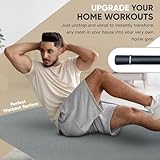
Gorilla Mats are endorsed by Shape Magazine, New York Magazine, The Spruce, and trusted by over 150,000 shoppers on Amazon. The unique non-slip top surface provides excellent grip whether you train in shoes or bare feet, and the circle-pattern bottom grips the floor and prevents any sliding during dynamic movements. The mat is crafted from premium, eco-friendly, non-toxic materials with no latex, no harmful odor, and no off-gassing — an important consideration for enclosed garage gym spaces. Each mat ships with a microfiber towel, storage bag, and two velcro straps for easy rolling and storage.

The Gorilla Mat is the best choice for garage gym owners who want a quick, clean workout surface for a specific training zone — under a treadmill, in front of a mirror for bodyweight work, or in the open floor area for cardio. It pairs perfectly with the IncStores rubber roll or Yes4All tiles which cover the heavy lifting area, letting the Gorilla Mat handle the dynamic movement zone. It rolls up instantly for storage if you need to park your car in the garage after training.
- Format: Single large roll-out mat
- Thickness: 1/4 inch (6mm)
- Size: 6 ft x 4 ft (72″ x 48″)
- Material: Premium ProFoam — non-toxic, no latex, no odor
- Includes: Microfiber towel, storage bag, 2 velcro straps
- Best use: Cardio zone, HIIT, yoga, stretching, spin bike area
- Pros: Non-toxic, endorsed by major publications, rolls up for storage, non-slip both sides, stylish design
- Cons: Not designed for heavy barbell work or power rack placement, covers limited area
Best for: Home gym owners who want a premium, portable exercise surface for cardio, bodyweight training, or yoga in their garage gym without covering the entire floor.
Buy on Amazon5. ProsourceFit Puzzle Exercise Mat — Best Thick Cushion Tiles
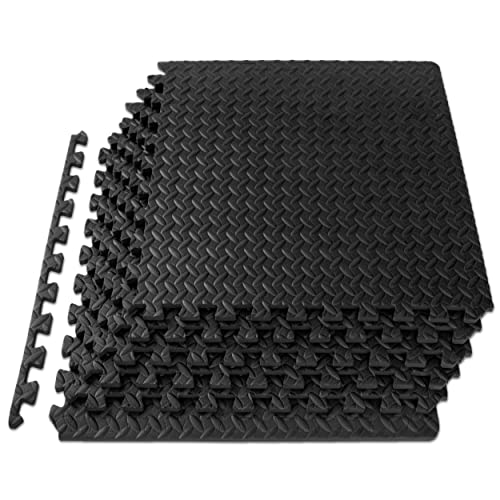
The ProsourceFit Puzzle Exercise Mat is the thickest foam tile option on this list at a full 3/4 inch (19mm) of EVA foam — nearly double the cushioning of standard 7/16-inch tiles. This extra thickness makes the ProsourceFit tiles the best choice for training activities that demand maximum joint protection: plyometrics, jump training, martial arts, gymnastics conditioning, and long sessions of bodyweight exercises on hard concrete floors. The generous cushioning significantly reduces fatigue in the feet, knees, and hips during standing workouts.

Each set covers 24 square feet with 6 interlocking tiles, and additional sets snap together seamlessly to cover larger areas. The waterproof EVA foam surface is easy to wipe clean and resists moisture, sweat, and gym cleaning products. ProsourceFit includes border edge pieces in each set, giving your gym floor a clean, finished edge rather than the stepped puzzle-tooth edge of raw tiles. The tiles are available in multiple colors including black, grey, and blue, allowing you to create color-zoned training areas in your garage gym.

The trade-off with 3/4-inch foam tiles is that they are too soft and compressible for heavy barbell lifting — a loaded squat rack will sink into them unevenly, and the surface can feel unstable under heavy loads. Use ProsourceFit tiles in your cardio, yoga, or dynamic movement zone, and pair them with a rubber roll or rubber tiles in the heavy lifting area. For the price, the ProsourceFit puzzle mat delivers the most cushioning per dollar of any option on this list and is ideal for creating a comfortable, multi-zone garage gym floor.
- Format: Interlocking EVA foam tiles with border edges
- Thickness: 3/4 inch (19mm) — thickest foam tile on this list
- Coverage per set: 24 sq ft (6 tiles)
- Colors available: Black, grey, blue, and more
- Includes: Border edge pieces for clean finish
- Best use: Plyometrics, jump training, yoga, martial arts, bodyweight conditioning
- Pros: Maximum cushioning, includes border edges, color options, waterproof, affordable
- Cons: Too soft for heavy barbell work, compresses under rack feet, foam only (no rubber top)
Best for: Anyone who needs maximum joint-cushioning for plyometrics, jump training, or long bodyweight sessions on concrete floors.
Buy on AmazonHow to Choose the Right Rubber Flooring for Your Garage Gym
The right flooring choice depends on what you train, how heavy you lift, and how much of your garage you need to cover. Here is everything you need to know before buying.
Rubber vs. Foam — What Is the Difference?
Rubber flooring (IncStores roll, Yes4All rubber tiles) is made from recycled rubber — dense, heavy, and highly durable. It handles heavy equipment, free weights, and dropped barbells without compressing or deforming. Foam flooring (Yes4All foam tiles, ProsourceFit) is made from EVA foam — lightweight, very cushioned, and easy to install, but not suitable for heavy loads. For serious strength training, always choose rubber in the lifting zone. Foam works well for cardio, stretching, and light exercise areas.
What Thickness Do You Need?
| Thickness | Best For | Example Activities |
|---|---|---|
| 1/4″ (6mm) | Cardio machines, portable mats | Treadmill, spin bike, yoga |
| 3/8″ (9.5mm) | Most home gyms — sweet spot ✅ | Free weights, machines, CrossFit |
| 1/2″ (12mm) | Heavy lifting, no intentional drops | Squats, bench, rows over 150 lbs |
| 3/4″ (19mm) | Powerlifting, Olympic lifts, drops | Deadlifts, barbell drops, heavy platforms |
| 1″+ | Commercial gyms, constant heavy drops | Competitive powerlifting platforms |
For most garage gym owners, 3/8-inch rubber is the ideal choice — it handles free weights up to 150 lbs, protects concrete effectively, and stays firm underfoot for heavy squats and presses. Only upgrade to 3/4-inch if you regularly drop barbells from height.
Rolls vs. Tiles — Which Format Is Right for You?
| Feature | Rubber Roll | Interlocking Tiles |
|---|---|---|
| Seams | None (seamless) | Every 24″ |
| Installation | Moderate — needs to flatten | Easy — snap together |
| Custom sizing | Order exact length | Buy in 24 sq ft sets |
| Portability | Difficult to move | Easy to remove/rearrange |
| Look | Professional, seamless | Grid pattern visible |
| Best for | Permanent garage gyms | Renters, flexible layouts |
Do You Need to Glue Rubber Flooring to Concrete?
For rolls 3/8 inch or thicker in a permanent home gym: no adhesive is needed. The weight of the rubber itself, combined with gym equipment sitting on top, keeps it firmly in place. Use double-sided carpet tape only at seams between multiple rolls to prevent gaps. For interlocking tiles: no adhesive is required — the interlocking system and equipment weight hold everything in place. Gluing is only recommended for commercial environments with constant heavy foot traffic.
How to Reduce New Rubber Smell
New rubber flooring has a noticeable smell that typically fades within 1–4 weeks. To accelerate this: unroll and air out the rubber in a well-ventilated space for 48–72 hours before installing, keep the garage door open during the first week of use, and wipe the surface with a diluted white vinegar solution (1:4 vinegar to water) which neutralizes the odor-causing compounds. The smell is not harmful — it is simply the natural off-gassing of recycled rubber.
How to Install Rubber Flooring in Your Garage Gym
Installing a Rubber Roll
- Measure your garage floor (length × width) and add 5–10% for cutting waste
- Sweep and clean the concrete floor thoroughly — remove all dust, oil, and debris
- Unroll the rubber and let it lie flat for 24–48 hours to fully acclimate and flatten
- Position the first roll against the longest wall, leaving 1/4 inch expansion gap at the wall
- Cut to length using a sharp utility knife and a metal straight edge — score multiple times rather than trying to cut through in one pass
- Butt the second roll tightly against the first — use double-sided carpet tape under the seam to prevent gaps
- Add rubber transition ramp strips at the garage door threshold for a clean, safe edge
Installing Interlocking Tiles
- Sweep and clean the concrete floor
- Start from the corner farthest from the garage door entrance
- Align the directional arrows on the tile backs consistently for a uniform pattern
- Press tiles firmly together and tap edges with a rubber mallet to seat the interlocks securely
- Leave a 6mm (1/4 inch) expansion gap along all walls to allow for seasonal temperature changes
- Cut edge tiles with a sharp utility knife to fit — mark the cut line with a straight edge first
- Snap border and edge strips onto exposed tile edges for a finished perimeter
How Much Does It Cost to Floor a Garage Gym?
The total cost depends entirely on your garage size and the flooring type you choose. Here is a realistic cost estimate for a standard 1-car garage bay (approximately 12×20 feet = 240 square feet):
| Flooring Type | Price Per Sq Ft | 240 Sq Ft Total |
|---|---|---|
| EVA foam tiles (7/16″) | ~$0.50–$0.80 | ~$120–$190 |
| Rubber tiles (0.56″) | ~$1.00–$1.50 | ~$240–$360 |
| Rubber roll (3/8″) | ~$0.80–$1.20 | ~$190–$290 |
| Thick foam tiles (3/4″) | ~$0.60–$1.00 | ~$145–$240 |
A popular cost-saving strategy is the zone approach: use a 3/8-inch rubber roll under your power rack and free weight area (~100 sq ft), and cheaper foam tiles in the cardio and stretching zone (~140 sq ft). This can cut total flooring cost by 30–40% compared to covering the entire floor in premium rubber.
Frequently Asked Questions
How thick should rubber flooring be for a garage gym?
For most home gym owners, 3/8 inch (9.5mm) is the ideal thickness. It handles free weights and equipment up to 150 lbs effectively, stays firm for squats and presses, and protects concrete well. Only go to 3/4 inch if you regularly perform Olympic lifts or drop barbells from height. For cardio-only zones, 1/4 to 7/16 inch foam tiles are perfectly adequate.
Is rubber gym flooring worth it?
Absolutely. Rubber flooring protects your concrete from cracks and equipment damage, reduces joint impact on your feet and knees, deadens noise and vibration for neighbors or family members below, and makes your garage gym look and feel like a real training facility. The average 1-car garage bay can be floored for $150–$300, which is a one-time investment that pays back immediately in equipment protection and training comfort.
Can you use horse stall mats for a gym floor?
Yes — 4×6-foot, 3/4-inch rubber horse stall mats are one of the most popular garage gym flooring options. They are extremely durable, available at farm supply stores like Tractor Supply for approximately $40–$50 per mat, and handle the heaviest gym equipment without issue. The main trade-offs are weight (each mat weighs 100 lbs), difficulty cutting, and the strong rubber smell that takes several weeks to dissipate. If you can source them locally, they are outstanding value.
How do you get the rubber smell out of gym mats?
Air out new rubber mats in a ventilated space for 48–72 hours before installing. Keep the garage door open during the first week of use. Wipe the surface with a solution of 1 part white vinegar to 4 parts water — this neutralizes the odor compounds effectively. The smell naturally disappears within 2–4 weeks of regular ventilation and use. The odor is not harmful, just temporarily unpleasant.
Do I need to glue rubber gym flooring to concrete?
No — for home gym use, adhesive is not necessary. Rolls 3/8 inch and thicker stay in place from their own weight and the equipment placed on them. Interlocking tiles are held by the interlock system and equipment weight. Use double-sided carpet tape only at roll seams if you notice any separation. Full adhesive bonding is typically only done in commercial gyms where constant heavy foot traffic creates more movement force.
What is the difference between rubber rolls and interlocking tiles for a garage gym?
Rubber rolls give a seamless, professional look with no gaps or seams — ideal for permanent gym installations where you want a clean floor. Interlocking tiles are modular — easy to install, rearrange, and remove, making them better for renters or anyone who may want to change the layout. Rolls require cutting to fit your exact dimensions; tiles come in standard 24 sq ft sets that snap together in any configuration.
Can rubber gym flooring be installed over existing flooring?
Yes, rubber gym flooring can be laid over most existing hard floors including concrete, tile, and hardwood. The surface must be flat, clean, and firmly secured — any loose or cracked areas in the existing floor should be repaired first to prevent the rubber from developing bumps or instability. Do not install rubber rolls over carpet as the surface compression creates an uneven and unstable lifting surface.
How long does rubber gym flooring last?
High-quality rubber rolls and tiles in a home gym environment typically last 10–20 years with normal use. Rubber does not degrade under gym equipment, resists moisture and UV damage, and does not crack or crumble under normal temperature changes. The main cause of premature wear is repeated sharp impact from dropped metal weights — if you drop barbells regularly, use 3/4-inch rubber or a dedicated lifting platform to protect the floor.
Disclosure: OwnGym.net participates in affiliate programs including Amazon Associates. We earn a small commission when you buy through our links — at no extra cost to you. This never influences our reviews.