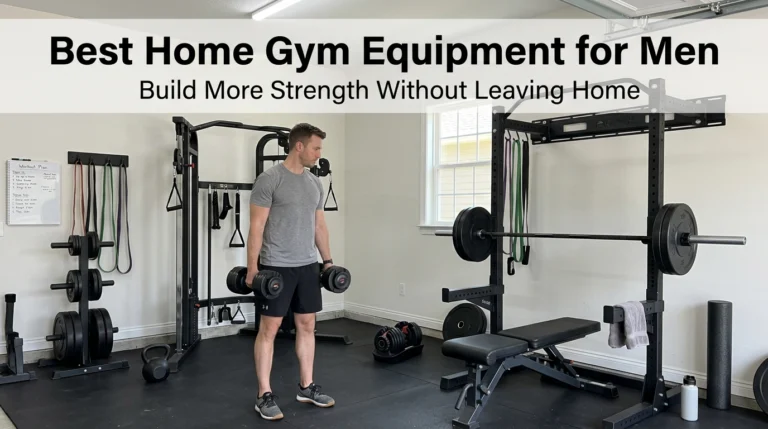
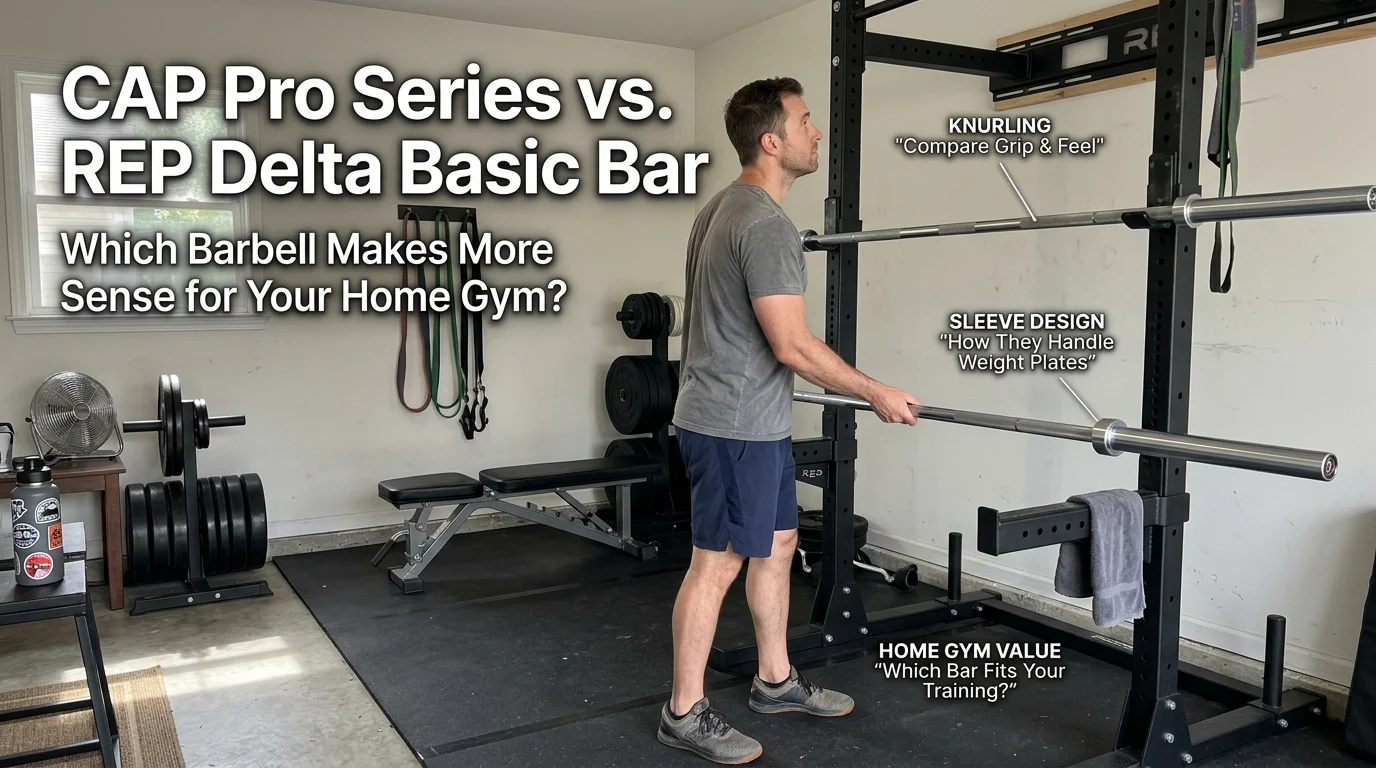
The CAP Beast and the REP Delta Basic Bar show up together on almost every “best budget barbell” list, and a lot of that content treats them as roughly interchangeable. They aren’t, or at least not anymore. Independent bar testers who actually buy and use these things have started separating the two, and the direction might surprise you if you last looked at this comparison a few years ago.
One naming note before the specs: CAP’s bar at this ASIN is officially the “The Beast” 7ft Olympic Barbell, Pro Series, not a generic “Pro Bar.” REP’s bar is the Delta Basic Bar, one of several bars REP makes, and the “Basic” in the name isn’t a knock, it’s the entry point in their lineup.
Quick Comparison
| Weight | ~44 lb (20kg) | 44.1 lb (20kg) |
| Shaft diameter | Not consistently listed, verify current spec | 29mm |
| Weight capacity | 1,200 lb (current listing) | 700 lb |
| Sleeve type | Rotating bushing sleeves | Brass bushing sleeves, slower-rotating |
| Knurling | “Volcano” style per current listing, has changed on this ASIN before | Medium-depth volcano style, center knurl, dual IWF/IPF marks |
| Finish | Black phosphate | Bright chrome, shaft and sleeves |
| Plate compatibility | Standard 2″ Olympic | Standard 2″ Olympic |
| Best suited for | Casual lifters on the tightest budget | Beginners through intermediate powerlifting and mixed-use training |
CAP “The Beast” 7ft Olympic Bar
6.8/ 10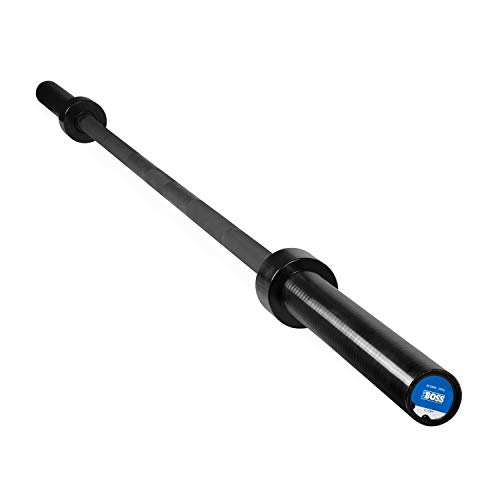
CAP has sold some version of this bar for years, and for a long time it was a genuinely reasonable pick if you needed a barbell and didn’t want to spend much. It fits standard 2 inch Olympic plates, the sleeves rotate, and the price has stayed near the bottom of the market.

Here’s the part worth knowing before you buy. Independent testers who’ve tracked this bar over multiple years report that CAP has changed the finish and knurl pattern under this same listing more than once, usually toward more colorways and away from the plainer, more consistent build the bar used to have. One tester who recommended this bar for years put it plainly: the price went up and the quality didn’t follow, just the cosmetics did. That doesn’t mean the current version is bad. It means you should treat the current listing’s spec claims (the 1,200 lb capacity number in particular) with some skepticism rather than as a settled fact, since a bar at this price point rarely gets independently load tested to confirm a number that high actually holds up over years of real use.
- Lowest price point of the two
- Widely available, easy to find replacement parts and collars
- Works fine for casual, lower-weight training
- Rotating sleeves handle basic lifts without issue
- Reported spec and finish changes under the same listing over time, hard to know exactly what you'll get
- 700lb+ capacity claims on a budget bar deserve skepticism, not blind trust
- Independent testers have downgraded their recommendation on this specific bar in recent years
- Knurl consistency less predictable than REP's
The CAP Beast still functions as a barbell and it’s the cheaper of the two. But if you have even a little flexibility in your budget, the reasons to pick this over the Delta have gotten weaker over the past couple of years, according to people who actually test these things.
REP Delta Basic Bar
8.6/ 10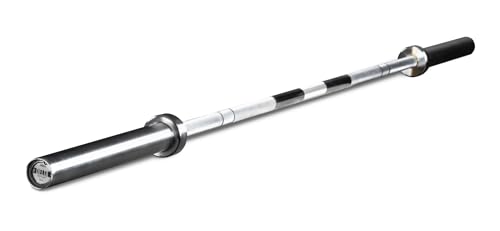
The Delta is REP’s entry point, and “entry point” here means the cheapest bar in a lineup that also includes serious powerlifting and Olympic bars, not a company’s only product with no track record behind it. That context matters. REP builds the Delta with the same medium-depth volcano knurling used across most of their lineup, plus dual IWF and IPF markings so you always know where to place your hands regardless of which style you’re training.

The 29mm shaft and brass bushing sleeves are tuned for powerlifting-style lifts, meaning the sleeves rotate slower than a bearing-based bar. For squats, bench, and deadlifts that’s exactly what you want. If you’re doing fast Olympic-style lifts like snatches or clean and jerks where the bar needs to spin freely as you drop under it, a bushing bar like this will feel less ideal than a bearing bar, though at this price point almost nothing on the market handles that better.
The 700 lb capacity is lower than the CAP’s claimed 1,200 lb. In practice this rarely matters. Very few home gym lifters ever load a bar anywhere close to 700 lbs, and a lower, more conservatively stated number from a company with a track record of testing its own gear is arguably more trustworthy than a higher number from a bar with less consistent specs.
- Consistent knurl and finish quality according to independent testers
- Dual IWF and IPF knurl marks add real versatility
- Bright chrome resists corrosion well over time
- Backed by a company with a broader, tested lineup, not just this one bar
- Costs more than the CAP
- 700lb capacity is lower on paper, even if it rarely matters in practice
- Brass bushings are the most basic sleeve type in REP's own lineup
- Slower-rotating sleeves aren't ideal if Olympic lifting is your main focus
The Delta costs more than the CAP, but it’s the bar independent testers currently point to as the best value under $200. For most home lifters doing squats, bench, deadlifts, and general strength work, that consistency is worth the extra cost.
Head to Head
Weight Capacity
1,200 lb versus 700 lb sounds like an easy win for CAP. It isn’t, once you think about who actually lifts that heavy. A 700lb-rated bar loaded to even 500 lbs is already well beyond what the overwhelming majority of home gym lifters will ever put on it. A high capacity number on an inexpensive bar is more of a marketing figure than a spec you’ll ever personally test, and a company that states a lower, more conservative number alongside a track record of consistent builds is telling you more than a company chasing a bigger headline number.
Knurling and Grip
REP’s dual IWF and IPF markings give you a fixed, repeatable hand position regardless of what style of lifting you’re doing that day. CAP’s knurl pattern has reportedly shifted across different production runs of the same listing, which means what you get may not match what you researched. If consistent, repeatable grip matters to your training, that’s a real point in REP’s favor.
Sleeve Rotation
Both use bushing sleeves rather than bearings, which is normal at this price point. REP’s are tuned specifically for slower, powerlifting-style rotation. If your training is mostly squats, bench, and deadlifts rather than Olympic lifts, this is the right tradeoff. If you’re doing cleans or snatches regularly, neither of these bars is really built for that, and you’d want to look at a dedicated Olympic weightlifting bar instead.
Consistency Over Time
This is the real differentiator. REP’s Delta has a track record of independent testers confirming the same build quality release after release. CAP’s Beast has a track record of the opposite, reported changes in finish and knurl under the same listing, with quality not clearly keeping pace with price increases. That’s a harder thing to fix after the fact than a spec number on a page.
Why the Capacity Number Isn’t the Whole Story
Most budget barbell comparisons lead with the weight capacity rating because it’s the easiest number to put in a table. What that misses is that capacity ratings on inexpensive bars are rarely independently verified, and the number that actually affects your day-to-day lifting experience is knurl consistency and sleeve smoothness, not a theoretical maximum you’ll likely never approach. A bar that spins smoothly and grips predictably at 225 lbs matters more to your training than a bar that claims it could theoretically hold 1,200 lbs but has inconsistent knurl from one production batch to the next. Judge these bars on what you’ll actually feel under load on a normal training day, not on the biggest number in the spec sheet.
Buying Guide: Which One Should You Get
Get the CAP Beast if:
- Budget is the single deciding factor and every dollar counts
- You’re doing lighter, casual training and won’t be loading the bar heavily
- You’re okay with some uncertainty about exactly which version of the bar you’ll receive
Get the REP Delta Basic Bar if:
- You want consistent, predictable quality backed by independent testing
- Your training is mostly squats, bench, and deadlifts
- You’d rather pay a bit more once than deal with an inconsistent product
- You want dual knurl markings for both powerlifting and general strength work
FAQ
Is the CAP Beast barbell still a good bar in 2026?
It still functions as a barbell and remains one of the cheapest options available. Independent testers who recommended it for years have recently downgraded it, citing changes to finish and knurl that haven’t kept pace with price increases. It’s not a bad bar, but its value relative to alternatives like the REP Delta has reportedly declined.
What’s the difference between bushing and bearing sleeves?
Bushings are simpler and slower-rotating, which suits powerlifting-style lifts like squats and deadlifts where you don’t need the bar spinning freely. Bearings rotate faster and more freely, which matters more for Olympic-style lifts like the snatch and clean and jerk. Both of these bars use bushings, which is standard at this price point.
Does the REP Delta Basic Bar work for Olympic lifts?
It can handle them, but its slower-rotating bushing sleeves and powerlifting-focused tuning mean it won’t feel as ideal for snatches and clean and jerks as a dedicated Olympic weightlifting bar with bearing sleeves. For general strength training and powerlifting movements, it’s well suited.
Do budget barbells need regular maintenance?
Yes. Both of these bars benefit from occasional cleaning of the knurling with a brush and a light coat of oil on the sleeves to keep rotation smooth. Neglecting this speeds up corrosion and can make the sleeves stick over time, regardless of which bar you choose.
Bottom Line
A few years ago this comparison might have gone either way depending on your budget. Right now, the honest answer is that the REP Delta Basic Bar is the bar independent testers currently point to as the best value under $200, and the reasons to choose the CAP Beast instead have narrowed to “it’s cheaper” rather than “it’s comparable.” If every dollar matters, the CAP still works. If you have any flexibility, the Delta is the safer buy.
Pairing a new barbell with a rack? Check our guide to power racks for low-ceiling home gyms, and if you’re worried about protecting your floor from bar drops, see our rubber flooring guide.
Disclosure: OwnGym.net participates in affiliate programs including Amazon Associates. We earn a small commission when you buy through our links — at no extra cost to you. This never influences our reviews.