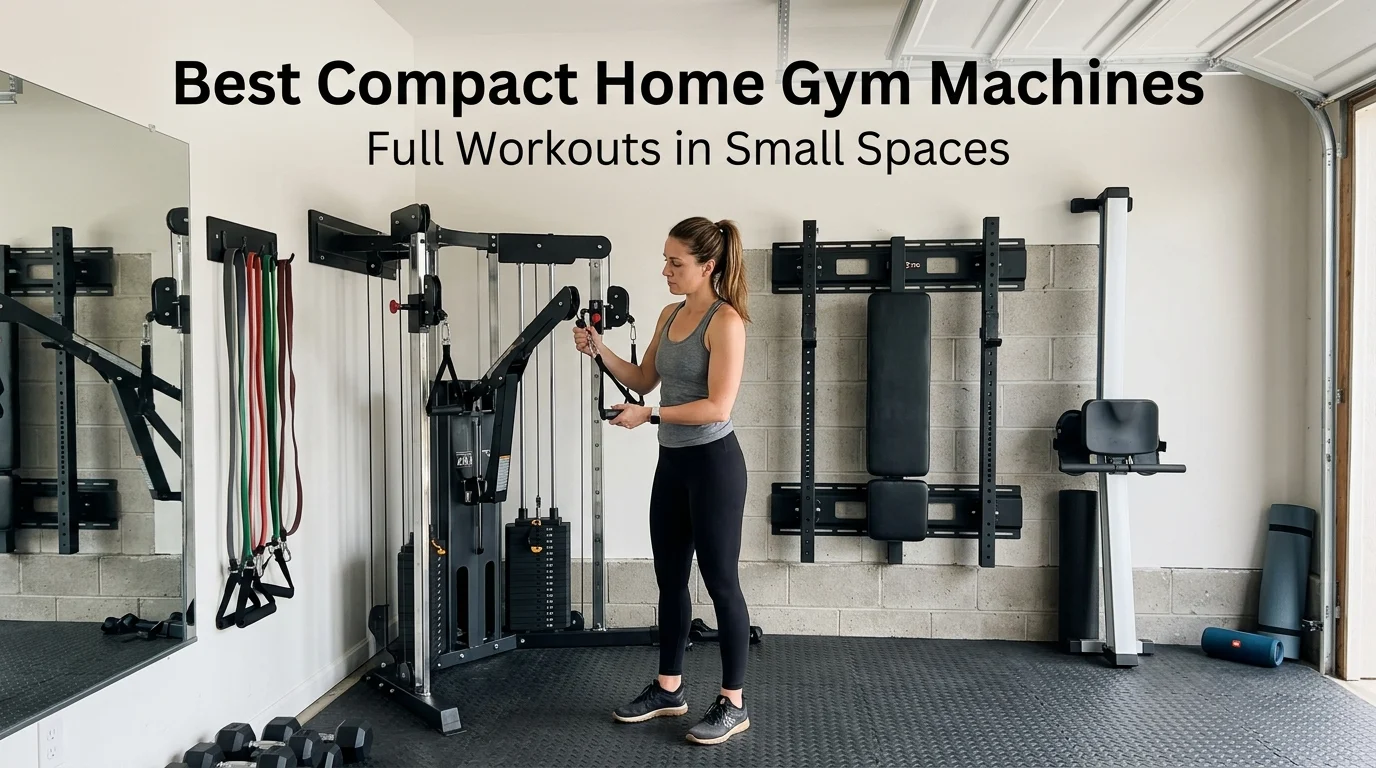
Here’s a mistake that costs people money every year: they buy a compact home gym machine based on the base dimensions listed in the product specs, it arrives, and they discover the machine technically fits in the room but there’s no clearance to actually use it. A cable machine with a 4 sq ft footprint still needs 2 to 3 feet of space in front of it for cable movements. A treadmill that folds to a small size still needs 6 to 8 feet of open floor when unfolded and someone running on it. A Smith machine rated at 15 sq ft still needs 7+ feet of ceiling height for the bar to travel correctly.
This guide fixes that. We cover 15 compact machines across six equipment types — smart gyms, cable and functional trainers, Smith machines, cardio equipment, bodyweight stations, and ab machines — but we start with the measurements you need before you read a single product review. Buying order, machine type, and space math first. Product recommendations second.
Step Zero: Measure Your Space Before You Read Anything Else
Three measurements to take right now, before you fall in love with any machine on this list:
- Ceiling height. Most cable machines, Smith machines, and lat pulldown setups need at least 7 to 7.5 feet of overhead clearance for the bar and cables to travel correctly. If your basement or spare room runs lower than 7 feet, your options narrow significantly — check individual machine heights carefully against your actual ceiling before ordering.
- Floor length and width. Measure the room or dedicated space you’re using, including where the door swings and any obstructions. A treadmill in running position typically needs 6 to 8 feet of length including the user. A functional trainer needs 2 to 3 feet of clear space in front of the cable attachment points for any pulling movement.
- Active training zone vs. machine footprint. The spec sheet tells you the machine’s base dimensions. The real space requirement is the base plus the clearance zone around it for movement. A cable machine that fits against the wall in 10 sq ft requires roughly 60 to 70 sq ft of active training zone once you factor in bench placement and cable range. The numbers on the listing are the minimum — not the realistic working space.
Which Machine Type Is Right for You
Smart/cable gym (Speediance, Eonfit wall mount): Best for men who want full-body cable training in the smallest possible footprint, with or without digital coaching. Requires wall mounting or floor standing, no weight plates needed.
Functional trainer / cable tower (GMWD, CR63, 3073 dual stack): Adjustable cable columns, free-weight feel, excellent exercise variety. Needs more floor space than a smart gym but less than a full multi-station machine. Best for men who want cable-based training without subscription software.
Smith machine (Mikolo): Adds guided barbell pressing and squatting to cable work. Largest footprint and ceiling-height requirement on this list. Best for men who want barbell-style compound movements without an open power rack.
Power rod system (BowFlex): Lightweight, compact, low-cost entry point to full-body cable training. Power rod resistance feels different from free weights and weight stacks — useful to know going in.
Bodyweight station (Power Tower): Pull-ups, dips, leg raises, push-up handles — all vertical. Minimal footprint, no weight stack. Best as a supplement to a dumbbell setup, not as a standalone machine.
Cardio machines (treadmill, walking pad, elliptical, bike, vibration plate): Each solves a different cardio problem — running, low-impact walking, cycling, or passive vibration recovery. Match the machine to how you actually want to use it, not to what sounds most impressive.
Ab machines (ZELUS, MERACH): Targeted core accessory work. Not a standalone machine — supplements a full training setup.
Quick Picks by Machine Type
- Best Smart Gym (Floor-Standing): Speediance Gym Monster 2 — full-body cable training, no subscription required for core features
- Best Smart Gym (Wall-Mounted): Eonfit E1 2.0 Wall Mounted Cable Machine — zero floor footprint, permanent wall install
- Best Budget Cable Machine: GMWD Cable Machine Home Gym — solid cable tower at an accessible price point
- Best Foldable Cable Machine: CR63 Foldable Cable Machine — folds for storage, real cable resistance
- Best Dual-Stack Functional Trainer: 3073 Functional Trainer, Dual 220lb Stacks — independent cable columns, highest resistance capacity here
- Best Smith Machine: Mikolo Smith Machine with Weight Stack — guided barbell + cable in one footprint
- Best Power Rod System: BowFlex Home Gym — compact, well-established power rod system
- Best Bodyweight Station: Power Tower Pull-Up Dip Station Foldable — foldable, covers pull-ups, dips, leg raises
- Best Folding Treadmill: Folding Treadmill, 2.5HP Quiet Brushless — folds flat, brushless motor for quieter operation
- Best Walking Pad: Walking Pad with Handle Bar and Adjustable Incline — incline option separates this from basic walking pads
- Best Under-Desk Elliptical: Yagud Under Desk Elliptical — low-impact movement at a desk without interrupting work
- Best Compact Exercise Bike: Pleny Folding Exercise Bike 5-in-1 — folds flat, five workout positions in one unit
- Best Vibration Plate: Vibration Plate Exercise Machine — recovery, circulation, low-impact muscle activation
- Best Ab Machine (Cable-Based): ZELUS Ab Machine for Home Gym — cable-resistance core work, adjustable
- Best Ab Machine (Adjustable Trainer): MERACH Adjustable Ab Trainer Machine — adjustable resistance, compact footprint
Comparison Table
| Machine | Type | Best For | Space Need |
|---|---|---|---|
| Speediance Gym Monster 2 | Smart Gym | Full-body cable, no plates | Small — floor-standing unit |
| Eonfit E1 2.0 | Smart Gym (Wall Mount) | Zero floor footprint | Minimal — wall-mounted |
| GMWD Cable Machine | Cable Tower | Budget cable training | Moderate |
| CR63 Foldable Cable Machine | Foldable Cable | Storage-friendly cable setup | Small when folded |
| 3073 Dual Stack Trainer | Functional Trainer | Independent dual cables, heavy loads | Moderate-large |
| Mikolo Smith Machine | Smith + Cable | Guided barbell + cable | Large — 7ft+ ceiling required |
| BowFlex Home Gym | Power Rod | Budget all-in-one | Small-moderate |
| Power Tower Foldable | Bodyweight Station | Pull-ups, dips, leg raises | Small — folds flat |
| Folding Treadmill 2.5HP | Cardio — Treadmill | Running/jogging at home | Moderate — folds for storage |
| Walking Pad with Incline | Cardio — Walking Pad | Low-impact walking + incline | Small — slides under bed/desk |
| Yagud Under-Desk Elliptical | Cardio — Elliptical | Active sitting during work | Minimal — desk use |
| Pleny Folding Bike 5-in-1 | Cardio — Bike | Multi-position compact cycling | Small — folds flat |
| Vibration Plate | Recovery/Activation | Low-impact, recovery, circulation | Minimal |
| ZELUS Ab Machine | Core/Ab | Cable-based core work | Minimal |
| MERACH Ab Trainer | Core/Ab | Adjustable bodyweight core | Minimal |
Smart Gyms
Smart gyms in this context means cable-resistance machines with digital coaching built in — one compact unit that replaces a full cable stack. These have the smallest footprint-to-exercise-variety ratio of anything on this list.
Speediance Gym Monster 2 — Best Floor-Standing Smart Gym
No products found.The Gym Monster 2 is the updated version of the original Speediance, and it addresses the main criticism of the first generation — smoother cable action under heavier loads and improved app stability. The cable attachment points adjust from floor height to 72 inches, covering rows, pulldowns, chest flyes, tricep pushdowns, curls, and shoulder work from a single unit that takes up roughly the floor space of a standard office chair when in use.
No products found.The Gym Monster 2 goes up to 220 lbs of resistance and doesn’t lock essential training features behind a mandatory subscription — a real differentiator in the smart gym category, where some competitors make the machine feel like a subscription service that happens to have a frame attached.
No products found.Best for men who want full-body cable training without weight plates, without a subscription paywall on the basics, and without dedicating a full room to the setup.
Eonfit E1 2.0 Wall Mounted Cable Machine — Best Zero-Footprint Option
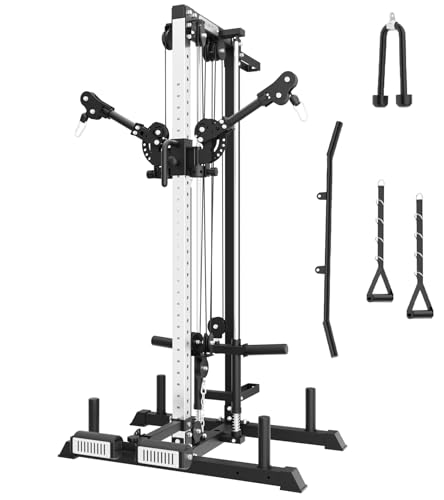
If the constraint is floor space specifically — an apartment spare room, a narrow garage corner, a shared space that needs to be functional for other things when you’re not training — a wall-mounted cable machine is the only category that takes zero floor space when not in use. The Eonfit E1 2.0 mounts directly to studs and folds flush against the wall between sessions.

The installation commitment is real and it’s worth saying plainly: you are drilling into structural studs, and this isn’t a reversible decision without some drywall repair. That’s not a problem — it’s a filter. If you’re not willing to make a permanent wall commitment, a floor-standing unit is the right choice. If you are, this is the most space-efficient strength machine on this list.
Cable Machines & Functional Trainers
Traditional cable machines — weight stacks, pulleys, adjustable columns — give you a free-weight cable feel without digital subscription hardware. Exercise variety is excellent, load precision is better than power rod systems, and these typically last longer under heavy use than smart gym systems in the same price range.
GMWD Cable Machine Home Gym — Best Budget Cable Tower
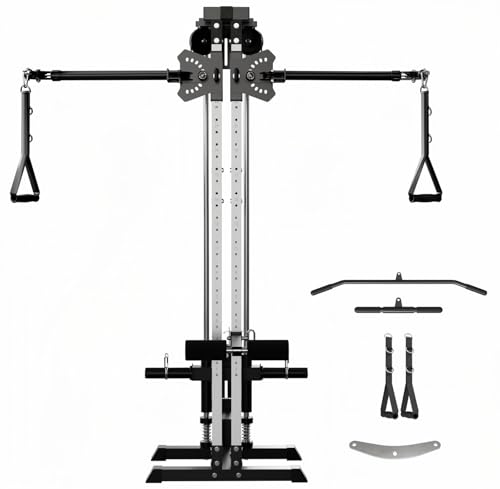
For men who want real cable resistance without the smart gym price tag, the GMWD is a straightforward single-stack cable tower that covers the fundamental pulling and pressing cable movements — lat pulldowns, cable rows, tricep pushdowns, bicep curls, face pulls — at an entry-level price point. Build quality is appropriate for the price; this is not a commercial-grade machine, but it handles consistent beginner-to-intermediate home gym use without issues reported consistently across user reviews.

Confirm ceiling height before ordering — cable towers with lat pulldown stations need overhead clearance for the bar path, and the specific height of this unit should be checked against your actual ceiling measurement.
CR63 Foldable Cable Machine — Best Storage-Friendly Cable Setup
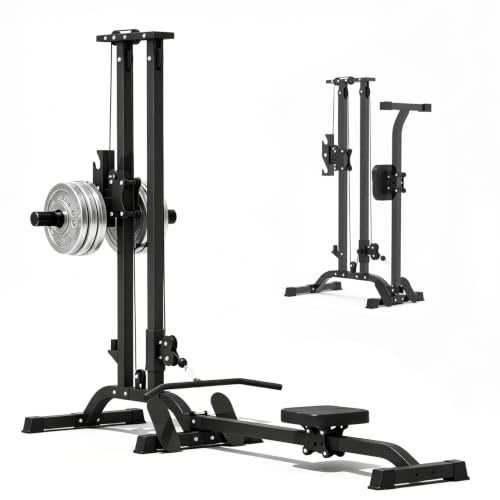
A foldable cable machine solves a specific problem: a room that needs to function as both a training space and something else — a bedroom, a living room annex, a shared garage. The CR63 folds for storage between sessions, giving you real cable resistance during your workout without a permanent machine footprint when you’re done.

The tradeoff for foldability is typically some reduction in maximum resistance capacity and frame rigidity compared to a non-folding cable tower at the same price. For beginner-to-intermediate training loads, that’s usually not a meaningful limitation — but it’s worth knowing if you’re planning to load cables heavily.

3073 Functional Trainer, Dual 220lb Stacks — Best for Serious Cable Training

Independent dual cable columns are what separate a functional trainer from a basic cable tower — two adjustable pulleys that move independently let you do cable crossovers, asymmetric movements, and unilateral training that a single-stack tower can’t replicate. At 220 lbs per stack, this covers serious strength training loads without hitting a ceiling within a year.

This is the largest and most expensive piece of equipment in the cable category on this list — it earns the “compact” label by replacing multiple separate machines in one footprint, not by being small. Measure carefully and confirm your ceiling height before ordering.

Best for men who’ve trained consistently, know they want cable-based strength training long-term, and want equipment that won’t limit them as they get stronger.
Smith Machine
Mikolo Smith Machine with Weight Stack — Best for Guided Barbell Training
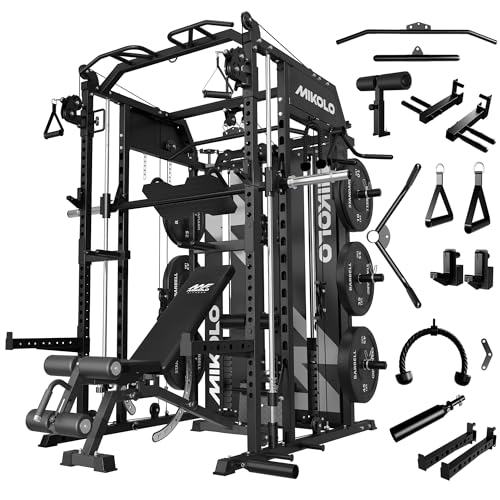
A Smith machine adds guided barbell pressing and squatting to your home gym without requiring an open power rack and spotter — the barbell travels on fixed rails, which removes the lateral stability element of free barbell work but also removes the risk of a failed rep going badly wrong when training alone. For men training without a training partner, that’s a meaningful safety consideration.

The Mikolo combines a Smith machine with a weight stack and cable system — meaning you get guided barbell work and cable training from one footprint rather than two separate machines. That’s the primary “compact” argument for a Smith machine combo at this price tier.

This is the piece on this list that requires the most space and the most ceiling height. Don’t buy it if your ceiling is under 7.5 feet or if your available floor space is genuinely tight — a cable tower or smart gym will serve you better in a smaller room.
Power Rod System
BowFlex Home Gym — Best Power Rod System
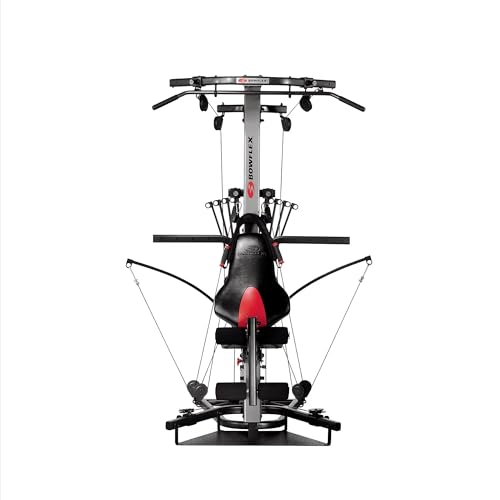
BowFlex essentially invented the home gym cable-machine category, and the power rod system is its core technology — flexible polymer rods generate resistance as they bend, replacing a traditional weight stack with something lighter, quieter, and more compact. For a first home gym machine, the BowFlex is one of the most established entry points available and covers a wide range of upper and lower body exercises from a single footprint.

The honest note on power rod resistance: it feels different from free weights and weight stacks, with tension increasing significantly through the end range of motion rather than staying consistent. That’s not a deal-breaker — it’s just a characteristic of the resistance type worth knowing before you buy, especially if you’ve only trained with free weights or traditional cable stacks.

Best for men who want an established brand, a compact footprint, and a lower entry price than a dual-stack functional trainer.
Bodyweight Station
Power Tower Pull-Up Dip Station Foldable — Best Bodyweight Station

Pull-ups and dips are two of the highest-value bodyweight exercises available — they build genuine back, bicep, tricep, and shoulder strength with no weight plates required, and they’re notoriously missing from most beginners’ home gym setups because people underestimate how effective they are. A foldable power tower adds both movements plus leg raise capability in a footprint that folds flat against a wall when not in use.

This works best as a supplement to a cable machine or dumbbell setup rather than a standalone machine. It covers vertical pulling and pushing movements specifically — the movements most commonly missing from a home gym that’s heavy on pressing and cardio equipment.
Compact Cardio Machines
Five cardio options here, covering very different use cases. Match the machine to how you’ll actually use it — running vs. walking vs. active sitting vs. low-impact cycling vs. recovery — not to which one sounds most impressive.
Folding Treadmill, 2.5HP Quiet Brushless Motor — Best for Running at Home
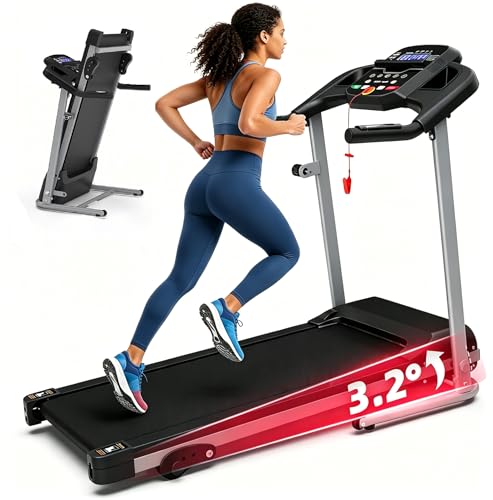
A brushless motor is quieter and more durable than a brushed motor at equivalent wattage — if you’re in an apartment or have other people in the house, noise is a real daily consideration, and “quiet” in the name isn’t just marketing copy here. At 2.5HP, this handles jogging and light running speeds comfortably for most users.
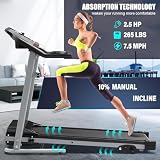
The fold-flat design addresses the storage problem — the treadmill folds vertically and can be rolled out of the way between sessions. Measure your ceiling height in the storage position too, since a vertically-folded treadmill needs enough wall height to lean against securely.

Walking Pad with Handle Bar and Adjustable Incline — Best for Low-Impact Walking
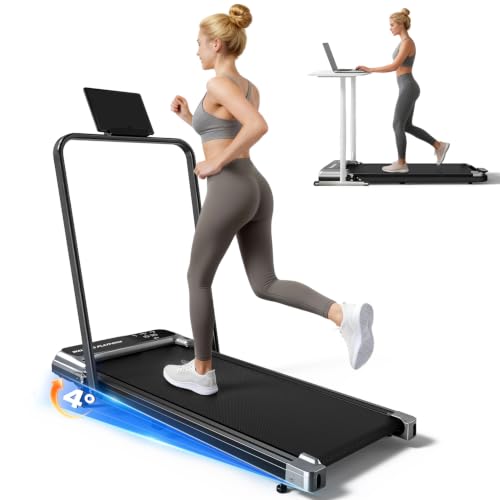
Walking pads are the most space-efficient treadmill-type machine available — flat enough to slide under a bed or desk when not in use, and built specifically for walking speed rather than running. The handle bar and adjustable incline on this model step it above a basic flat walking pad: incline walking meaningfully increases calorie burn and leg engagement compared to flat walking, and the handle bar gives a stability reference during use.

If your primary cardio goal is daily step count and low-impact movement rather than running or interval training, this is the right machine — it does one thing specifically and does it in less space than anything else on this list.
Yagud Under Desk Elliptical Machine — Best for Active Sitting
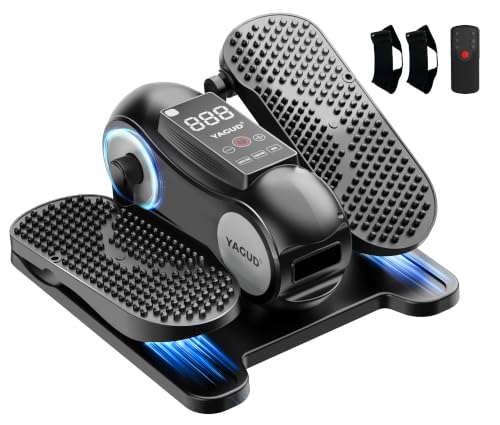
An under-desk elliptical doesn’t replace a cardio session — it replaces sitting completely still during work hours, which for men who work from home is one of the most realistic ways to add daily low-intensity movement without finding extra time in the schedule. The Yagud runs quietly enough for phone calls and video meetings without the other person noticing.

Set realistic expectations for this category: you’re getting incidental movement and improved circulation during desk time, not a workout. That’s valuable — sedentary time is a real health risk — but it’s a different tool from the treadmill or walking pad above.
Pleny Folding Exercise Bike, 5-in-1 — Best Compact Exercise Bike
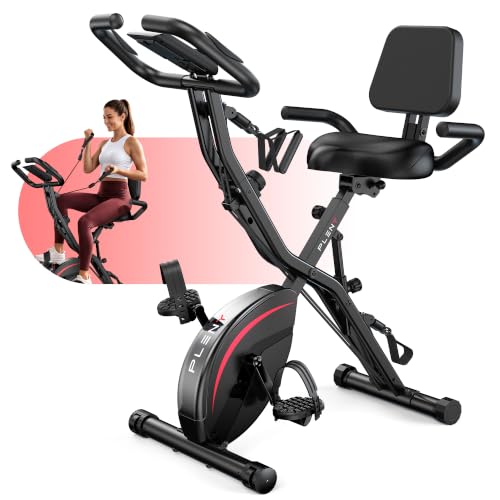
A folding exercise bike eliminates the permanent space commitment of a standard stationary bike — fold it flat between sessions and it stores against a wall or in a closet. The “5-in-1” designation on this model refers to multiple riding positions and resistance configurations, giving more variety than a single-mode upright bike.

Cycling is one of the more joint-friendly cardio options for men with knee or hip issues, and a compact bike at this price point is a legitimate entry into consistent low-impact conditioning without a significant space or financial commitment.
Vibration Plate Exercise Machine — Best for Recovery and Low-Impact Activation
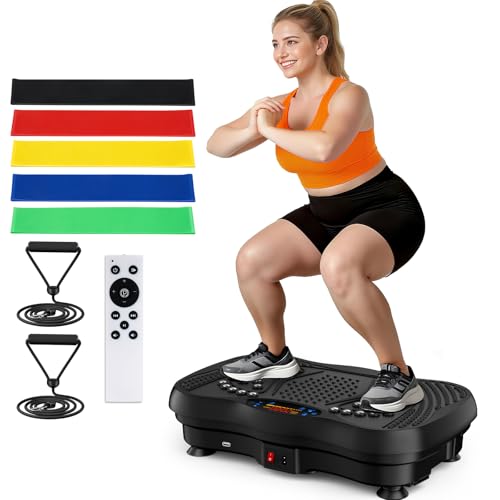
A vibration plate operates differently from every other machine on this list — instead of generating resistance for you to push against, it vibrates at a frequency that causes involuntary muscle contractions throughout the body. The evidence base for vibration plates as a primary training tool is limited, but for recovery, circulation, and warm-up activation — particularly for men who sit for long periods during the day — the low-impact use case is more well-supported.

Don’t buy this expecting it to replace strength training or cardio. Buy it as a recovery and activation supplement to a real training setup — used before a session to wake up muscles, or after a session to aid circulation and reduce soreness.
Ab Machines
Two ab machines here with different resistance mechanisms — one cable-based, one adjustable bodyweight. Neither replaces core training within your main workout, but both add targeted core volume in a minimal footprint.
ZELUS Ab Machine for Home Gym — Best Cable-Based Ab Machine
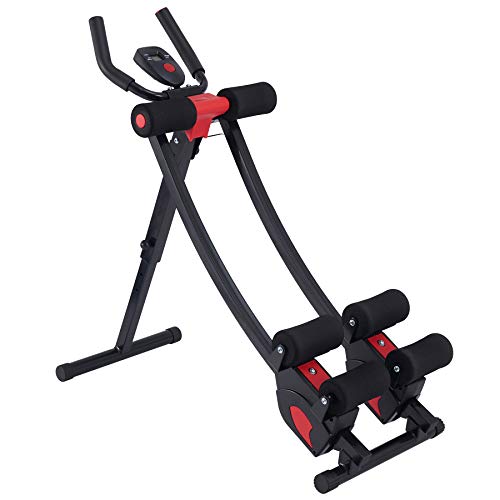
Cable crunches are one of the most consistently underrated core exercises — they allow progressive overload on the abs the same way you’d progressively overload any other muscle, which bodyweight-only core work doesn’t allow. The ZELUS adds that cable-resistance core option in a minimal footprint that stores flat when not in use.

Best used as a core finisher after your main training session — 3 to 4 sets of cable crunches and rope pull-throughs at the end of a cable machine workout. Standalone use as your only training equipment is wasting its potential.
MERACH Adjustable Ab Trainer Machine — Best Bodyweight Core Trainer

Where the ZELUS uses cable resistance, the MERACH is a guided bodyweight ab trainer — adjustable resistance through angle and body position rather than a weight stack. The adjustability allows progression as core strength improves, which is the main limitation of fixed-angle ab rollers and similar tools.

For a home gym that already has a cable machine, the ZELUS above is the more versatile core tool. For a home gym that’s primarily cardio-based with no cable machine, the MERACH is the better standalone core accessory since it doesn’t require an existing cable setup.
Who Should NOT Buy a Compact All-in-One Machine
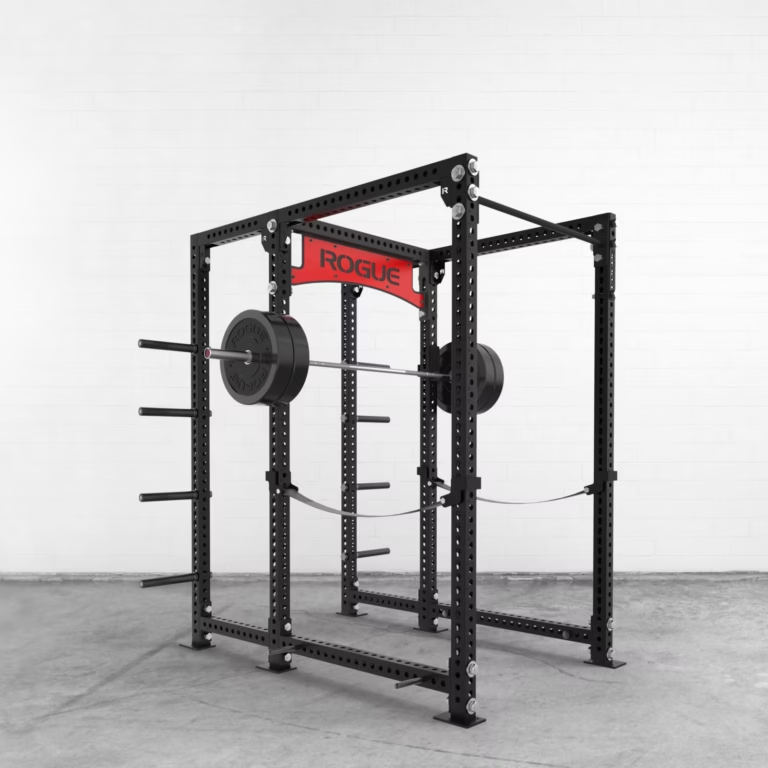
- Men whose primary training goal is heavy barbell compound lifting. Squat, deadlift, and barbell bench press at serious loads require a real power rack and barbell — no compact machine replicates those movements properly. If your goal is powerlifting-style strength development, the right investment is a half rack and barbell, not a cable machine or Smith machine combo.
- Anyone whose available ceiling height is under 7 feet. Most cable towers, Smith machines, and functional trainers on this list need 7 to 7.5 feet of clearance. Measure before you order anything.
- Men buying cardio equipment as motivation, not habit. A treadmill, bike, or rower only works if you use it consistently. If you don’t already have a cardio habit, the cheapest option in this category is the right entry point — not the most impressive one.
Frequently Asked Questions
How much space do I actually need for a compact home gym machine?
The machine’s listed base dimensions are the minimum, not the working space. Add 2 to 3 feet of clearance in front of any cable machine for movement range, and factor in bench placement if you’ll be pressing. Most cable setups need a minimum active training zone of roughly 7 by 10 feet including clearance — significantly more than just the machine footprint alone.
What ceiling height do I need for a cable machine or Smith machine?
Most cable towers with a lat pulldown station and Smith machines need at least 7 to 7.5 feet of ceiling clearance for the bar and cables to travel correctly. Measure your actual ceiling height before ordering — especially in basements and converted garages where height can vary.
Is a power rod system (BowFlex) as effective as a weight stack cable machine?
Power rods provide effective resistance for general fitness and beginner-to-intermediate training. The feel is different from a weight stack — resistance increases significantly through the end range of motion rather than staying consistent — and maximum resistance caps out lower than a dual-stack functional trainer. For most home gym users at the beginner stage, that’s not a meaningful limitation. For heavier, more experienced lifters, a weight stack machine provides better load precision for progressive overload.
What’s the difference between a smart gym and a regular cable machine?
A smart gym uses digital or motor-driven resistance rather than a physical weight stack, typically includes a screen and coaching software, and may require a monthly subscription for full feature access. A traditional cable machine uses a physical weight stack and pulley system — no subscription, no software, more durable under heavy use, and generally a more free-weight-like feel under load.
Quick Recap: Where to Buy
| Machine | Best For | Check Price |
|---|---|---|
| Speediance Gym Monster 2 | Best Smart Gym | View on Amazon |
| Eonfit E1 2.0 Wall Mount | Best Zero-Footprint Option | View on Amazon |
| GMWD Cable Machine | Best Budget Cable Tower | View on Amazon |
| CR63 Foldable Cable Machine | Best Foldable Cable Setup | View on Amazon |
| 3073 Dual Stack Trainer | Best Serious Cable Setup | View on Amazon |
| Mikolo Smith Machine | Best Smith + Cable Combo | View on Amazon |
| BowFlex Home Gym | Best Power Rod System | View on Amazon |
| Power Tower Foldable | Best Bodyweight Station | View on Amazon |
| Folding Treadmill 2.5HP | Best for Running at Home | View on Amazon |
| Walking Pad with Incline | Best Low-Impact Walking | View on Amazon |
| Yagud Under-Desk Elliptical | Best Active Sitting | View on Amazon |
| Pleny Folding Bike 5-in-1 | Best Compact Exercise Bike | View on Amazon |
| Vibration Plate | Best Recovery Tool | View on Amazon |
| ZELUS Ab Machine | Best Cable-Based Core Work | View on Amazon |
| MERACH Ab Trainer | Best Bodyweight Core Trainer | View on Amazon |
The right compact machine is the one that fits your actual space, matches how you already train or genuinely plan to train, and doesn’t require a room you don’t have. Measure first. Pick your machine type second. Then choose a specific product. In that order, every time.
Disclosure: OwnGym.net participates in affiliate programs including Amazon Associates. We earn a small commission when you buy through our links — at no extra cost to you. This never influences our reviews.